<?xml version="1.0" encoding="utf-8"?><?xml-stylesheet type="text/xsl" href="atom.xsl"?>
<feed xmlns="http://www.w3.org/2005/Atom">
    <id>https://solutionarchitecture101.com/blog</id>
    <title>Solution Architecture Blog</title>
    <updated>2022-08-15T00:00:00.000Z</updated>
    <generator>https://github.com/jpmonette/feed</generator>
    <link rel="alternate" href="https://solutionarchitecture101.com/blog"/>
    <subtitle>Solution Architecture Blog</subtitle>
    <icon>https://solutionarchitecture101.com/img/favicon.svg</icon>
    <entry>
        <title type="html"><![CDATA[Cost estimation in technology projects]]></title>
        <id>https://solutionarchitecture101.com/blog/cost-estimation-for-solution-architects</id>
        <link href="https://solutionarchitecture101.com/blog/cost-estimation-for-solution-architects"/>
        <updated>2022-08-15T00:00:00.000Z</updated>
        <summary type="html"><![CDATA[A Solution Architect’s guide]]></summary>
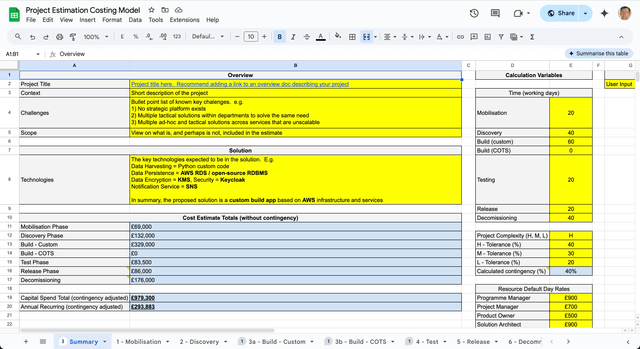
        <content type="html"><![CDATA[<p>Want to cut to the chase and download a project cost estimation model you can use right away?  You’ll find a link <a href="https://docs.google.com/spreadsheets/d/1WfqXYYEN7SNOd8ex5oOXA1SNyFHoNwkYIaueYRSeMqA/edit?usp=sharing" target="_blank" rel="noopener noreferrer">here</a>.</p>
<p><img decoding="async" loading="lazy" src="https://solutionarchitecture101.com/img/article_posts/cost_estimation.webp" alt="Cost estimation model spreadsheet" class="img_ev3q"></p>
<p>truncate</p>
<p>Let’s start with a definition.  An IT Cost Estimate is a <strong>point in time view of the resources and estimated costs associated with a project</strong>.  This guide gives an overview of the process with focus on <strong>what you need to know from a Solution Architect viewpoint</strong>.</p>
<p>There are many elements to the cost of a project.  Some obvious, others less so.  For example, decommissioning is an element that can be often overlooked.  Both from a financial viewpoint and planning for it within a design.</p>
<p>Cost estimation can be done using a range of techniques.  From a spreadsheet created internally by a company or team to any one of a dozen established formal methods.  Some sectors may insist on adoption of a particular type.  That being the case this guide will be of less value.  This summary will <strong>focus on the approach of using a spreadsheet and keeping things as simple as possible</strong>.</p>
<h2 class="anchor anchorWithStickyNavbar_LWe7" id="what-is-a-cost-estimate">What is a cost estimate?<a href="https://solutionarchitecture101.com/blog/cost-estimation-for-solution-architects#what-is-a-cost-estimate" class="hash-link" aria-label="Direct link to What is a cost estimate?" title="Direct link to What is a cost estimate?">​</a></h2>
<p>A stupidly obvious sounding question.  However, a recap will ensure we’re all clear.  A cost estimate, summarises a <strong>complete view</strong> of the costs associated with an project.  Complete meaning from <strong>inception to decommissioning</strong>.  There are a lot of elements.  Many of which may not be obvious.</p>
<h2 class="anchor anchorWithStickyNavbar_LWe7" id="why-does-it-exist">Why does it exist?<a href="https://solutionarchitecture101.com/blog/cost-estimation-for-solution-architects#why-does-it-exist" class="hash-link" aria-label="Direct link to Why does it exist?" title="Direct link to Why does it exist?">​</a></h2>
<p>Mainly to <strong>aid with obtaining funding for a project</strong>.  Some projects have drivers such as legislative change and will likely be done at whatever cost.  Others will be measured against return on investment and compared with other candidate projects looking for funding.</p>
<p>They also help with resource planning but the focus is mainly financial.</p>
<h2 class="anchor anchorWithStickyNavbar_LWe7" id="who-uses-it">Who uses it?<a href="https://solutionarchitecture101.com/blog/cost-estimation-for-solution-architects#who-uses-it" class="hash-link" aria-label="Direct link to Who uses it?" title="Direct link to Who uses it?">​</a></h2>
<p><strong>- Sponsors</strong> - Call this group whatever you will.  Ultimately there’s a group of, or better still a single person, <strong>responsible for the project</strong>.  Whether it goes ahead or not.  When and if it’s stopped.</p>
<p><strong>- Programme Manager</strong> - Uses the contents to inform project sponsors of costs at various stages.  It’s common for this role to have different titles.</p>
<p><strong>- Project Manager</strong> - Alongside, or reporting to, the Programme Manager the Project Manager forms a team which is responsible for forming project costs.  The Project Manager will work with other team members to a) identify resources required, b) collate estimates from those resources</p>
<p><strong>- Solution Architect</strong> - Now we come to the most important input of the team.  :)  More seriously, the multidisciplinary nature of the role combined with a breadth of experience across technical and non technical areas means the Architect is well placed to understand a) who is involved, b) what they will do, c) for how long, d) unknowns of project delivery, e) risks etc.</p>
<p>There are others including Portfolio Managers looking after a range of projects within a department or division.</p>
<h2 class="anchor anchorWithStickyNavbar_LWe7" id="how-is-it-done">How is it done?<a href="https://solutionarchitecture101.com/blog/cost-estimation-for-solution-architects#how-is-it-done" class="hash-link" aria-label="Direct link to How is it done?" title="Direct link to How is it done?">​</a></h2>
<p>It’s useful to remember a cost estimate is typically not a one time exercise.  It is done at various stages of a project.  Most obviously at the start but can be done at subsequent stages.  Especially if future funds release is linked to existing estimates.</p>
<p>Generally the steps involve:</p>
<ol>
<li>A project idea is formed.  Some early analysis done around requirements and provisional solution ideas.</li>
<li>The requirements and solution inform the types of resource involved, technology implementation, risks and general level of comfort with knowns / unknowns.</li>
<li>The Solution Architect, with others, completes the estimation template</li>
<li>The estimate is peer reviewed, refined and agreed</li>
</ol>
<div class="theme-admonition theme-admonition-tip admonition_xJq3 alert alert--success"><div class="admonitionHeading_Gvgb"><span class="admonitionIcon_Rf37"><svg viewBox="0 0 12 16"><path fill-rule="evenodd" d="M6.5 0C3.48 0 1 2.19 1 5c0 .92.55 2.25 1 3 1.34 2.25 1.78 2.78 2 4v1h5v-1c.22-1.22.66-1.75 2-4 .45-.75 1-2.08 1-3 0-2.81-2.48-5-5.5-5zm3.64 7.48c-.25.44-.47.8-.67 1.11-.86 1.41-1.25 2.06-1.45 3.23-.02.05-.02.11-.02.17H5c0-.06 0-.13-.02-.17-.2-1.17-.59-1.83-1.45-3.23-.2-.31-.42-.67-.67-1.11C2.44 6.78 2 5.65 2 5c0-2.2 2.02-4 4.5-4 1.22 0 2.36.42 3.22 1.19C10.55 2.94 11 3.94 11 5c0 .66-.44 1.78-.86 2.48zM4 14h5c-.23 1.14-1.3 2-2.5 2s-2.27-.86-2.5-2z"></path></svg></span>tip</div><div class="admonitionContent_BuS1"><p>Be clear about what is in and out of scope.  Scope expansion such as inclusion of more systems, business areas etc. are likely to effect estimates far more than individual requirements.</p></div></div>
<h2 class="anchor anchorWithStickyNavbar_LWe7" id="feedback-loops">Feedback loops<a href="https://solutionarchitecture101.com/blog/cost-estimation-for-solution-architects#feedback-loops" class="hash-link" aria-label="Direct link to Feedback loops" title="Direct link to Feedback loops">​</a></h2>
<p>Comparing the <strong>initial cost estimates</strong> of a project with the <strong>final costs</strong> provides useful insights that <strong>improve accuracy</strong>.  Identifying areas of improvement and taking that learning into future estimates is the most efficient logical means of improvement.</p>
<p>A project team often disband after completion.  What’s needed is the knowledge around cost estimation to transcend each project.  Within some organisations that role is fulfilled by the <strong>Cost Estimation Team</strong>.</p>
<h2 class="anchor anchorWithStickyNavbar_LWe7" id="cost-estimation-team">Cost estimation team<a href="https://solutionarchitecture101.com/blog/cost-estimation-for-solution-architects#cost-estimation-team" class="hash-link" aria-label="Direct link to Cost estimation team" title="Direct link to Cost estimation team">​</a></h2>
<p>Organisations that value cost estimation and do it well often have a dedicated team focused on this task.  Typically a <strong>Cost Estimator</strong> will be assigned to your project.  They will supply estimation models, help with completion of them and revisit estimates at various points of the project.</p>
<h2 class="anchor anchorWithStickyNavbar_LWe7" id="involvement-vs-time">Involvement vs time<a href="https://solutionarchitecture101.com/blog/cost-estimation-for-solution-architects#involvement-vs-time" class="hash-link" aria-label="Direct link to Involvement vs time" title="Direct link to Involvement vs time">​</a></h2>
<p>Some resources have little to no involvement depending on the project stage.  For example, testing resource doesn’t add value at the very beginning of a project.  Yes, it’s useful to have early sight of things but in the case of testing resource when little to nothing is known about the solution not much can be added from the testing viewpoint.</p>
<p>Involvement from roles such as the Solution Architect decrease over time.  The same goes for business analysts.</p>
<h2 class="anchor anchorWithStickyNavbar_LWe7" id="estimates-improve-with-time">Estimates improve with time<a href="https://solutionarchitecture101.com/blog/cost-estimation-for-solution-architects#estimates-improve-with-time" class="hash-link" aria-label="Direct link to Estimates improve with time" title="Direct link to Estimates improve with time">​</a></h2>
<p>It’s common to do multiple estimates for a single project.  Accuracy ‘should’ increase over time.  In most cases it’s sensible to start with a high contingency built into cost.  As much as 40%.  After the discovery period more is known and it will be possible to revise the estimate.  Now that could mean the costs go up or down BUT it’s common at this stage for there to be less unknowns so the contingency goes down.  Say to 20%.</p>
<h2 class="anchor anchorWithStickyNavbar_LWe7" id="key-takeaways">Key Takeaways<a href="https://solutionarchitecture101.com/blog/cost-estimation-for-solution-architects#key-takeaways" class="hash-link" aria-label="Direct link to Key Takeaways" title="Direct link to Key Takeaways">​</a></h2>
<div class="theme-admonition theme-admonition-info admonition_xJq3 alert alert--info"><div class="admonitionHeading_Gvgb"><span class="admonitionIcon_Rf37"><svg viewBox="0 0 14 16"><path fill-rule="evenodd" d="M7 2.3c3.14 0 5.7 2.56 5.7 5.7s-2.56 5.7-5.7 5.7A5.71 5.71 0 0 1 1.3 8c0-3.14 2.56-5.7 5.7-5.7zM7 1C3.14 1 0 4.14 0 8s3.14 7 7 7 7-3.14 7-7-3.14-7-7-7zm1 3H6v5h2V4zm0 6H6v2h2v-2z"></path></svg></span>info</div><div class="admonitionContent_BuS1"><p><strong>Don’t underestimate</strong> - People generally underestimate the time require for tasks in general.</p><p><strong>Know your team</strong> - Ideally the people involved in an estimate’s creation will have experience in both the process and their role.  Be aware of this and complete your estimates with this experience in mind where input is coming from several people.</p><p><strong>Previous costing experience</strong> - Compare your estimates with existing, preferably complete, projects.  Ask colleagues to sense check the estimates.  If possible.</p></div></div>
<h2 class="anchor anchorWithStickyNavbar_LWe7" id="references">References<a href="https://solutionarchitecture101.com/blog/cost-estimation-for-solution-architects#references" class="hash-link" aria-label="Direct link to References" title="Direct link to References">​</a></h2>
<ul>
<li><a href="https://www.gov.uk/government/publications/cost-estimating-guidance" target="_blank" rel="noopener noreferrer">UK Gov Cost Estimating Guidance</a> - Focus on infrastructure more than technology but plenty of technology relevant principles.</li>
</ul>]]></content>
        <author>
            <name>Bill Lunney</name>
            <uri>https://solutionarchitecture101.com</uri>
        </author>
        <category label="cost estimation" term="cost estimation"/>
        <category label="project planning" term="project planning"/>
        <category label="templates" term="templates"/>
    </entry>
    <entry>
        <title type="html"><![CDATA[Design Governance]]></title>
        <id>https://solutionarchitecture101.com/blog/design-governance-approval</id>
        <link href="https://solutionarchitecture101.com/blog/design-governance-approval"/>
        <updated>2021-03-08T00:00:00.000Z</updated>
        <summary type="html"><![CDATA[A Solution Architect’s guide to surviving the Design Authority!]]></summary>
        <content type="html"><![CDATA[<p>Ensuring IT solutions meet organisational standards and strategies.  In a nutshell, that’s it.</p>
<p>In this section we’ll cover:</p>
<ul>
<li>What is Design Governance?</li>
<li>Why bother?</li>
<li>Who is involved?</li>
<li>How does it work?</li>
<li>Solution Architect role?</li>
<li>Solution Architect required skillset</li>
</ul>
<p><img decoding="async" loading="lazy" src="https://solutionarchitecture101.com/img/article_posts/design_governance.webp" alt="Design Governance" class="img_ev3q"></p>
<h2 class="anchor anchorWithStickyNavbar_LWe7" id="what-is-design-governance">What is design governance?<a href="https://solutionarchitecture101.com/blog/design-governance-approval#what-is-design-governance" class="hash-link" aria-label="Direct link to What is design governance?" title="Direct link to What is design governance?">​</a></h2>
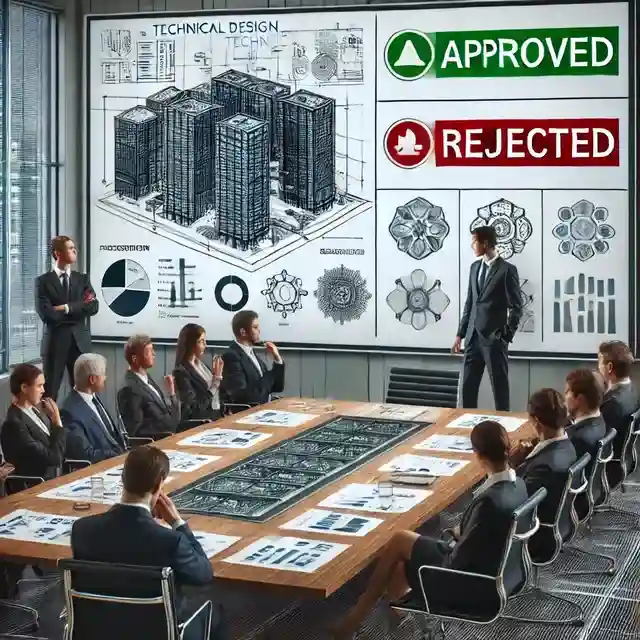
<p>Every moderate to large organisation will have a view on how their technology estate should operate.  <strong>Design governance is the process by which proposed IT solutions are reviewed, approved and implemented.</strong>  The tools, technologies and standards that provide the best blend of factors including cost and flexibility.</p>
<h3 class="anchor anchorWithStickyNavbar_LWe7" id="a-spanish-inquisition">A Spanish Inquisition?<a href="https://solutionarchitecture101.com/blog/design-governance-approval#a-spanish-inquisition" class="hash-link" aria-label="Direct link to A Spanish Inquisition?" title="Direct link to A Spanish Inquisition?">​</a></h3>
<p>Not at all.  At least it shouldn’t be.  The personalities involved play a big part in the ‘friendliness’ of such forums.  As does the leadership and character shown by the session chair.  Understand that people all have their own quirks.</p>
<div class="theme-admonition theme-admonition-tip admonition_xJq3 alert alert--success"><div class="admonitionHeading_Gvgb"><span class="admonitionIcon_Rf37"><svg viewBox="0 0 12 16"><path fill-rule="evenodd" d="M6.5 0C3.48 0 1 2.19 1 5c0 .92.55 2.25 1 3 1.34 2.25 1.78 2.78 2 4v1h5v-1c.22-1.22.66-1.75 2-4 .45-.75 1-2.08 1-3 0-2.81-2.48-5-5.5-5zm3.64 7.48c-.25.44-.47.8-.67 1.11-.86 1.41-1.25 2.06-1.45 3.23-.02.05-.02.11-.02.17H5c0-.06 0-.13-.02-.17-.2-1.17-.59-1.83-1.45-3.23-.2-.31-.42-.67-.67-1.11C2.44 6.78 2 5.65 2 5c0-2.2 2.02-4 4.5-4 1.22 0 2.36.42 3.22 1.19C10.55 2.94 11 3.94 11 5c0 .66-.44 1.78-.86 2.48zM4 14h5c-.23 1.14-1.3 2-2.5 2s-2.27-.86-2.5-2z"></path></svg></span>tip</div><div class="admonitionContent_BuS1"><p>Be clear about what is in and out of scope.  Scope expansion such as inclusion of more systems, business areas etc. are likely to affect estimates far more than individual requirements.</p></div></div>
<h2 class="anchor anchorWithStickyNavbar_LWe7" id="why">Why?<a href="https://solutionarchitecture101.com/blog/design-governance-approval#why" class="hash-link" aria-label="Direct link to Why?" title="Direct link to Why?">​</a></h2>
<p><strong>Managing complexity</strong>.  It’s that simple.  Large organisations have hugely complex, diverse technologies.  Like all things in life, time changes everything.  Approaches to solving problems change.  Technologies and tools evolve.  People come and go, along with their opinions to problem solving.</p>
<p>Using standardised technologies, tools and standards provides several benefits:</p>
<ul>
<li>Managing a standardised set of technologies, tools and standards is, all round, easier than a diverse one</li>
<li>Cost savings from re-use</li>
<li>Adherence to a divisional and organisational strategic view</li>
</ul>
<p>Complexity is an unavoidable inevitably.  The best we can do is put in place mechanisms to manage it.</p>
<h2 class="anchor anchorWithStickyNavbar_LWe7" id="whos-involved">Who’s involved?<a href="https://solutionarchitecture101.com/blog/design-governance-approval#whos-involved" class="hash-link" aria-label="Direct link to Who’s involved?" title="Direct link to Who’s involved?">​</a></h2>
<p>A small to medium organisation may have a single design authority.  Large government entities or corporations are likely to have several.  For example, different divisions of a large bank are likely to have a design authority aligned to each division.</p>
<p><strong>Each design authority typically has a single representative from domains including security, infrastructure, information (data) and Enterprise Architecture.</strong>  Each domain representative reviews the design and ensures it meets the standards relevant to their specific area.</p>
<p>A hierarchical structure of design authorities is common in large organisations.  The structure of these can vary a great deal.  A Solution Architect typically works within application design.  Dedicated forums can exist for areas such as security.</p>
<h3 class="anchor anchorWithStickyNavbar_LWe7" id="building-a-rolls-royce-or-a-ford">Building a Rolls Royce or a Ford?<a href="https://solutionarchitecture101.com/blog/design-governance-approval#building-a-rolls-royce-or-a-ford" class="hash-link" aria-label="Direct link to Building a Rolls Royce or a Ford?" title="Direct link to Building a Rolls Royce or a Ford?">​</a></h3>
<p>The standards required in some areas of design can be overwhelming for many projects.  Not every solution needs the same level of compliance.  Sensible, frank conversations are required to ensure the most appropriate solution is implemented.</p>
<h3 class="anchor anchorWithStickyNavbar_LWe7" id="what-good-looks-like-varies-between-different-people">What good looks like varies between different people<a href="https://solutionarchitecture101.com/blog/design-governance-approval#what-good-looks-like-varies-between-different-people" class="hash-link" aria-label="Direct link to What good looks like varies between different people" title="Direct link to What good looks like varies between different people">​</a></h3>
<p>Design forum domain experts are custodians.  They are held to account on ensuring designs meet the standards of their respective areas.  What good looks like to them is meeting those standards to a high degree.  Their accountability is measurable and long standing.</p>
<p>A project and the team delivering a solution (and its design) is a transitory thing.  They provide a solution to a problem and often disband.  What good looks like to the project is delivering on time, budget and with minimum risk.</p>
<p>Understanding this concept is essential.  It enables a Solution Architect to identify points of potential contention early and initiate the appropriate work to reach an informed compromise.</p>
<div class="theme-admonition theme-admonition-tip admonition_xJq3 alert alert--success"><div class="admonitionHeading_Gvgb"><span class="admonitionIcon_Rf37"><svg viewBox="0 0 12 16"><path fill-rule="evenodd" d="M6.5 0C3.48 0 1 2.19 1 5c0 .92.55 2.25 1 3 1.34 2.25 1.78 2.78 2 4v1h5v-1c.22-1.22.66-1.75 2-4 .45-.75 1-2.08 1-3 0-2.81-2.48-5-5.5-5zm3.64 7.48c-.25.44-.47.8-.67 1.11-.86 1.41-1.25 2.06-1.45 3.23-.02.05-.02.11-.02.17H5c0-.06 0-.13-.02-.17-.2-1.17-.59-1.83-1.45-3.23-.2-.31-.42-.67-.67-1.11C2.44 6.78 2 5.65 2 5c0-2.2 2.02-4 4.5-4 1.22 0 2.36.42 3.22 1.19C10.55 2.94 11 3.94 11 5c0 .66-.44 1.78-.86 2.48zM4 14h5c-.23 1.14-1.3 2-2.5 2s-2.27-.86-2.5-2z"></path></svg></span>tip</div><div class="admonitionContent_BuS1"><p>It is essential that you know the individuals who will approve your design.  Speak with them personally.  Let them know your early thoughts on approach.  Get their feedback.</p></div></div>
<h2 class="anchor anchorWithStickyNavbar_LWe7" id="how-does-it-work">How does it work?<a href="https://solutionarchitecture101.com/blog/design-governance-approval#how-does-it-work" class="hash-link" aria-label="Direct link to How does it work?" title="Direct link to How does it work?">​</a></h2>
<p>First and foremost, the <strong>design forum is not the place for design work and debate</strong>.  It is the place where experts from various domains come together to discuss as a group something they should already understand.</p>
<ol>
<li>Organisation defines its high, mid/low level standards and best practices</li>
<li>Solution Architects produce a design that meets those standards</li>
<li>A review slot with the design forum is booked and a copy of the design is shared with reviewers</li>
<li>Reviewers meet to discuss the design and approve or decline the proposed solution</li>
</ol>
<div class="theme-admonition theme-admonition-tip admonition_xJq3 alert alert--success"><div class="admonitionHeading_Gvgb"><span class="admonitionIcon_Rf37"><svg viewBox="0 0 12 16"><path fill-rule="evenodd" d="M6.5 0C3.48 0 1 2.19 1 5c0 .92.55 2.25 1 3 1.34 2.25 1.78 2.78 2 4v1h5v-1c.22-1.22.66-1.75 2-4 .45-.75 1-2.08 1-3 0-2.81-2.48-5-5.5-5zm3.64 7.48c-.25.44-.47.8-.67 1.11-.86 1.41-1.25 2.06-1.45 3.23-.02.05-.02.11-.02.17H5c0-.06 0-.13-.02-.17-.2-1.17-.59-1.83-1.45-3.23-.2-.31-.42-.67-.67-1.11C2.44 6.78 2 5.65 2 5c0-2.2 2.02-4 4.5-4 1.22 0 2.36.42 3.22 1.19C10.55 2.94 11 3.94 11 5c0 .66-.44 1.78-.86 2.48zM4 14h5c-.23 1.14-1.3 2-2.5 2s-2.27-.86-2.5-2z"></path></svg></span>tip</div><div class="admonitionContent_BuS1"><p>Attend a session of your specific design authority before taking your own design.  It will allow familiarisation with the format, protocols and general tone of the session.  You’ll get invaluable insight into many aspects of the process and characters involved.</p></div></div>
<h2 class="anchor anchorWithStickyNavbar_LWe7" id="role-of-the-solution-architect-in-a-design-forum">Role of the Solution Architect in a design forum<a href="https://solutionarchitecture101.com/blog/design-governance-approval#role-of-the-solution-architect-in-a-design-forum" class="hash-link" aria-label="Direct link to Role of the Solution Architect in a design forum" title="Direct link to Role of the Solution Architect in a design forum">​</a></h2>
<ol>
<li>Ensure the requirement is clear and measurable</li>
<li>Understand the constraints and dependencies that the solution must take account of</li>
<li>Familiarise yourself with the standards, policies and protocols of your governance area</li>
<li>Document the most pragmatic, clear and concise solution possible</li>
</ol>
<div class="theme-admonition theme-admonition-tip admonition_xJq3 alert alert--success"><div class="admonitionHeading_Gvgb"><span class="admonitionIcon_Rf37"><svg viewBox="0 0 12 16"><path fill-rule="evenodd" d="M6.5 0C3.48 0 1 2.19 1 5c0 .92.55 2.25 1 3 1.34 2.25 1.78 2.78 2 4v1h5v-1c.22-1.22.66-1.75 2-4 .45-.75 1-2.08 1-3 0-2.81-2.48-5-5.5-5zm3.64 7.48c-.25.44-.47.8-.67 1.11-.86 1.41-1.25 2.06-1.45 3.23-.02.05-.02.11-.02.17H5c0-.06 0-.13-.02-.17-.2-1.17-.59-1.83-1.45-3.23-.2-.31-.42-.67-.67-1.11C2.44 6.78 2 5.65 2 5c0-2.2 2.02-4 4.5-4 1.22 0 2.36.42 3.22 1.19C10.55 2.94 11 3.94 11 5c0 .66-.44 1.78-.86 2.48zM4 14h5c-.23 1.14-1.3 2-2.5 2s-2.27-.86-2.5-2z"></path></svg></span>tip</div><div class="admonitionContent_BuS1"><p>Get comfortable with the fact designs are often a compromise.  In many cases the resulting design will not meet all standards or expectations.  Your role is to present a clear, informed, pragmatic proposal.</p></div></div>
<h2 class="anchor anchorWithStickyNavbar_LWe7" id="design-authority-skills-required">Design Authority Skills Required<a href="https://solutionarchitecture101.com/blog/design-governance-approval#design-authority-skills-required" class="hash-link" aria-label="Direct link to Design Authority Skills Required" title="Direct link to Design Authority Skills Required">​</a></h2>
<ul>
<li><strong>Pragmatism</strong> - More often than not a solution design will be a compromise.  Time, cost, technical constraints are all factors that influence any proposed solution.</li>
<li><strong>Communication</strong> - You’ll need to convey your proposal in a concise, clear and effective way</li>
<li><strong>Confidence</strong> - If you’ve done your prep, spoke to people ahead of time, you should know the outcome.  I say know the outcome rather than ‘get approval’ because there are times when you know approval won’t happen but there are reasons for attending.  Another story…</li>
</ul>
<h2 class="anchor anchorWithStickyNavbar_LWe7" id="key-takeaways">Key Takeaways<a href="https://solutionarchitecture101.com/blog/design-governance-approval#key-takeaways" class="hash-link" aria-label="Direct link to Key Takeaways" title="Direct link to Key Takeaways">​</a></h2>
<div class="theme-admonition theme-admonition-info admonition_xJq3 alert alert--info"><div class="admonitionHeading_Gvgb"><span class="admonitionIcon_Rf37"><svg viewBox="0 0 14 16"><path fill-rule="evenodd" d="M7 2.3c3.14 0 5.7 2.56 5.7 5.7s-2.56 5.7-5.7 5.7A5.71 5.71 0 0 1 1.3 8c0-3.14 2.56-5.7 5.7-5.7zM7 1C3.14 1 0 4.14 0 8s3.14 7 7 7 7-3.14 7-7-3.14-7-7-7zm1 3H6v5h2V4zm0 6H6v2h2v-2z"></path></svg></span>info</div><div class="admonitionContent_BuS1"><ul>
<li>Identify who’s signing off your design</li>
<li>Speak with these design signatories ahead of submission</li>
<li>Attend a design authority session prior to your submission</li>
</ul></div></div>
<h2 class="anchor anchorWithStickyNavbar_LWe7" id="related-topics">Related topics<a href="https://solutionarchitecture101.com/blog/design-governance-approval#related-topics" class="hash-link" aria-label="Direct link to Related topics" title="Direct link to Related topics">​</a></h2>
<ul>
<li>High level solution design - TODO</li>
</ul>]]></content>
        <author>
            <name>Bill Lunney</name>
            <uri>https://solutionarchitecture101.com</uri>
        </author>
        <category label="design governance" term="design governance"/>
        <category label="technical design authority" term="technical design authority"/>
    </entry>
    <entry>
        <title type="html"><![CDATA[High Level Solution Design]]></title>
        <id>https://solutionarchitecture101.com/blog/high-level-solution-design</id>
        <link href="https://solutionarchitecture101.com/blog/high-level-solution-design"/>
        <updated>2016-09-22T00:00:00.000Z</updated>
        <summary type="html"><![CDATA[How to approach completing a design]]></summary>
        <content type="html"><![CDATA[<p>Want to cut to the chase and download a project cost estimation model you can use right away?  You’ll find a link <a href="https://docs.google.com/document/d/1E0yxE_F_TC-HYrW7xwfd06spMy3L3iQFmYNKMXZPCg4/edit?usp=sharing" target="_blank" rel="noopener noreferrer" title="here">here</a>.</p>
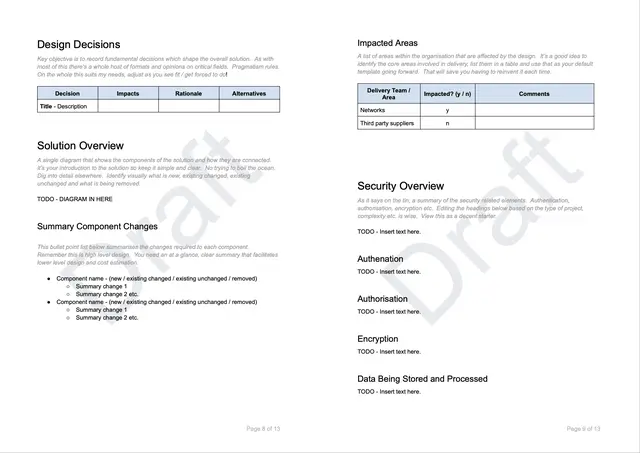
<p>One of the most common activities for a Solution Architect is production of a design document.  Most organisations have their own template and there’s more commonality than not between them.  In this article we’ll go beyond what is useless coverage of the content headings and <strong>focus on tips and techniques for completing these documents efficiently.</strong></p>
<p><img decoding="async" loading="lazy" src="https://solutionarchitecture101.com/img/article_posts/solution_design.webp" alt="Solution Design template" class="img_ev3q"></p>
<p>truncate</p>
<h2 class="anchor anchorWithStickyNavbar_LWe7" id="what-is-a-solution-design">What is a Solution Design?<a href="https://solutionarchitecture101.com/blog/high-level-solution-design#what-is-a-solution-design" class="hash-link" aria-label="Direct link to What is a Solution Design?" title="Direct link to What is a Solution Design?">​</a></h2>
<p>No, I’m not being sarcastic!  It sounds so basic but as I often do let’s ensure we’re all clear from the beginning.  My definition of a Solution Design is:<br>
<strong>A blueprint which defines how a software system will be implemented.  It describes the components, connections, data, security and related elements which provide a high level view of how a technology solution will be implemented.</strong></p>
<p>Now that we’ve covered what may appear to be an obvious point we can focus the rest of this piece on practical tips and strategies for completion.  I say this as simply taking the headings of a Solution Design document and discussing them ad-nauseam offers little value.</p>
<h2 class="anchor anchorWithStickyNavbar_LWe7" id="whos-interested-in-its-contents">Who’s interested in its contents?<a href="https://solutionarchitecture101.com/blog/high-level-solution-design#whos-interested-in-its-contents" class="hash-link" aria-label="Direct link to Who’s interested in its contents?" title="Direct link to Who’s interested in its contents?">​</a></h2>
<p>Let’s work backwards from <strong>who</strong> wants <strong>what</strong> out of this document.  That’ll start to inform the task list of things we need to get done.</p>
<table><thead><tr><th>Who</th><th>Interest</th></tr></thead><tbody><tr><td>Project Manager</td><td>Governance gateway to progress (financial, technical)</td></tr><tr><td>Technical Design Authority</td><td>Governance approval from various domains.  Security, data, infrastructure, Enterprise Architecture etc.  Does it meet standards?</td></tr><tr><td>Analyst</td><td>Requirements alignment</td></tr><tr><td>System owners</td><td>Approval of changes proposed to individual systems</td></tr><tr><td>DevOps</td><td>Can the proposed changes be successfully coded / implemented?</td></tr></tbody></table>
<h2 class="anchor anchorWithStickyNavbar_LWe7" id="who-validates-it-meets-requirements">Who validates it meets requirements?<a href="https://solutionarchitecture101.com/blog/high-level-solution-design#who-validates-it-meets-requirements" class="hash-link" aria-label="Direct link to Who validates it meets requirements?" title="Direct link to Who validates it meets requirements?">​</a></h2>
<p>Often nobody!  As I put it, <strong>the Solution Design could often be a recipe for cookie dough</strong>.  Enterprise Architecture check for strategic alignment.  Are you using common shared services and building things that align with the ‘vision’?  Domain experts in data, security and infrastructure check their bits with much the same purpose.
I’ve listed a Business Analyst as someone with an interest in the design.  So don’t they have the role of checking it meets requirements?  In reality, no.  They’re often included in the design but I can tell you from experience this generally doesn’t happen.
What, now appears an old school method, used to happen is we would have a <strong>requirements traceability</strong> section / sessions.  Objective being, to show physically in the design how a requirement is met.  It was a part of the governance process.  However for at least the past 10 years that’s not been the case.
The key point here is highlighting a real world observation which is I see this as a real gap that’s very common.  So don’t be surprised if you find yourself going through a bit of a box ticking exercise.  Something that has a veneer of robustness to it, and indeed does from some viewpoints, except the main one that matters.  <strong>Does it provide a solution to the actual problem it set out to solve?</strong></p>
<hr>
<h2 class="anchor anchorWithStickyNavbar_LWe7" id="design-checklist">Design checklist<a href="https://solutionarchitecture101.com/blog/high-level-solution-design#design-checklist" class="hash-link" aria-label="Direct link to Design checklist" title="Direct link to Design checklist">​</a></h2>
<p>At the start of most engagements you need to find out <strong>what, who and when as regards your obligations</strong>.  You will be accountable for design approval.  You’ll also be responsible for most, if not all, of the design’s production.  It used to be that domain specialists such as infrastructure would be responsible for ‘their bit’ of the design.  That’s far less common these days.
A very clear divide becomes clear as I write this.  Producing the design is one thing.  Getting it through a Technical Design Authority is another.  <strong>This topic is focused on the design document itself</strong>.  I’ll cover the TDA separately but you’ll definitely see overlap.</p>
<ol>
<li><strong>Governance</strong> - Identify what’s expected of you, how it works, who the signatories are.  Usually you’ll have an Intranet or similar guide showing everything the Technical Design Authority wants, when and how.</li>
<li><strong>Engage people early</strong> - Can’t stress this enough.  Get some early thoughts together on a solution, find the people who will sign off your design and go speak to them.  Start with a 15 minute intro on who you are, what you’re trying to achieve and how you think you’ll do it.  Nothing formal.  Be economical with time and precise with your thinking.</li>
<li><strong>Put everything you know into the design from day 1</strong> - A key measurable objective of your work is the design.  Work back from there.  Put all your thinking into the document.  Flesh out ideas.  Iterate.  Don’t make the mistake of having material everywhere and think I’ll get around to putting it into the design later.  You’ll f**** it up!  Be that underestimating the time needed, duplicate effort, miss key parts etc.</li>
<li><strong>Diarise time with signatories and third parties where necessary</strong> - Get slots in the diary to review relevant sections with people.  e.g. Validate your designs with them.  Be blunt and ask the question of are you happy with this.</li>
</ol>
<div class="theme-admonition theme-admonition-tip admonition_xJq3 alert alert--success"><div class="admonitionHeading_Gvgb"><span class="admonitionIcon_Rf37"><svg viewBox="0 0 12 16"><path fill-rule="evenodd" d="M6.5 0C3.48 0 1 2.19 1 5c0 .92.55 2.25 1 3 1.34 2.25 1.78 2.78 2 4v1h5v-1c.22-1.22.66-1.75 2-4 .45-.75 1-2.08 1-3 0-2.81-2.48-5-5.5-5zm3.64 7.48c-.25.44-.47.8-.67 1.11-.86 1.41-1.25 2.06-1.45 3.23-.02.05-.02.11-.02.17H5c0-.06 0-.13-.02-.17-.2-1.17-.59-1.83-1.45-3.23-.2-.31-.42-.67-.67-1.11C2.44 6.78 2 5.65 2 5c0-2.2 2.02-4 4.5-4 1.22 0 2.36.42 3.22 1.19C10.55 2.94 11 3.94 11 5c0 .66-.44 1.78-.86 2.48zM4 14h5c-.23 1.14-1.3 2-2.5 2s-2.27-.86-2.5-2z"></path></svg></span>tip</div><div class="admonitionContent_BuS1"><p>Like the sports world.  Design approvals are not done at a formal review session.  It’s the work you’ve put in before that gets you approval.  The formal review should be a formality.  You’ve spoken with everyone before hand and gained support before even getting to review.</p></div></div>
<h2 class="anchor anchorWithStickyNavbar_LWe7" id="design-example">Design Example<a href="https://solutionarchitecture101.com/blog/high-level-solution-design#design-example" class="hash-link" aria-label="Direct link to Design Example" title="Direct link to Design Example">​</a></h2>
<p>You can download a copy of my design template <a href="https://docs.google.com/document/d/1E0yxE_F_TC-HYrW7xwfd06spMy3L3iQFmYNKMXZPCg4/edit?usp=sharing" target="_blank" rel="noopener noreferrer">here</a>.  There’s little value in going through it section by section in this guide.  You’ll find comments within the document providing guidance on each area.  There are definitely tips and techniques you can use to ensure you efficiently complete each section.  The document itself will cover that.
What I’ll say is once you’ve seen literally dozens of these you’ll find they are all much the same.</p>
<h2 class="anchor anchorWithStickyNavbar_LWe7" id="key-takeaways">Key Takeaways<a href="https://solutionarchitecture101.com/blog/high-level-solution-design#key-takeaways" class="hash-link" aria-label="Direct link to Key Takeaways" title="Direct link to Key Takeaways">​</a></h2>
<div class="theme-admonition theme-admonition-info admonition_xJq3 alert alert--info"><div class="admonitionHeading_Gvgb"><span class="admonitionIcon_Rf37"><svg viewBox="0 0 14 16"><path fill-rule="evenodd" d="M7 2.3c3.14 0 5.7 2.56 5.7 5.7s-2.56 5.7-5.7 5.7A5.71 5.71 0 0 1 1.3 8c0-3.14 2.56-5.7 5.7-5.7zM7 1C3.14 1 0 4.14 0 8s3.14 7 7 7 7-3.14 7-7-3.14-7-7-7zm1 3H6v5h2V4zm0 6H6v2h2v-2z"></path></svg></span>info</div><div class="admonitionContent_BuS1"><p><strong>Speak to people</strong> - Find out who has a seat at the design approval table and go speak to them.</p><p><strong>Start early</strong> - Use the design document as your scratchpad.  Start filling out content as early as you can.  Iterate it over time.</p><p><strong>Don’t blindside readers</strong> - Show people things early and get them on the journey with you.  Nothing annoys people more than being left out or seeing something late.  This begins to touch more on Technical Design Authority topic.</p></div></div>
<h2 class="anchor anchorWithStickyNavbar_LWe7" id="related-topics">Related topics<a href="https://solutionarchitecture101.com/blog/high-level-solution-design#related-topics" class="hash-link" aria-label="Direct link to Related topics" title="Direct link to Related topics">​</a></h2>
<ul>
<li>Design Governance - TODO</li>
</ul>]]></content>
        <author>
            <name>Bill Lunney</name>
            <uri>https://solutionarchitecture101.com</uri>
        </author>
        <category label="solution design" term="solution design"/>
        <category label="templates" term="templates"/>
    </entry>
</feed>